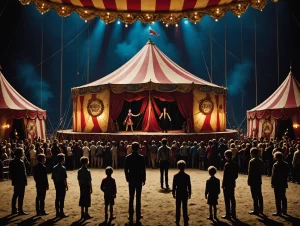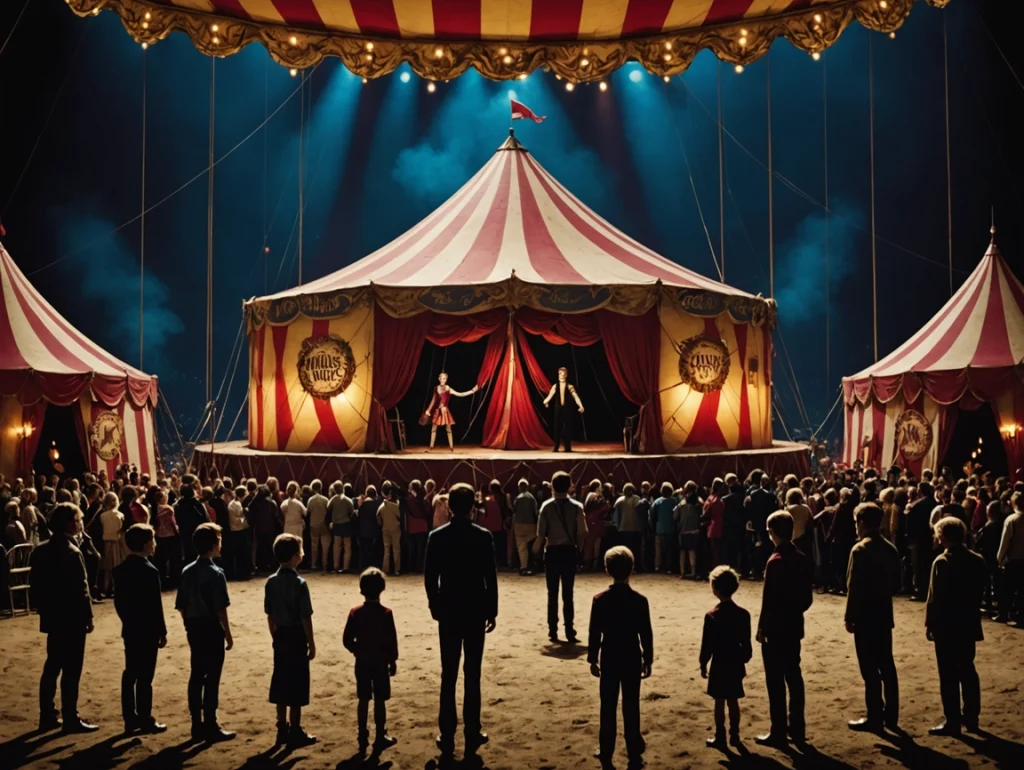
There is something about the circus that makes it the perfect horror backdrop — colour masking dread, spectacle hiding danger.
On the surface, it is all colour and laughter: sequined costumes, impossible acrobatics, the smell of popcorn and sawdust. Children press their faces against the tent flaps. Crowds roar with delight. Indeed, everything here exists to manufacture wonder.
And yet, something underneath all that brightness feels deeply, instinctively wrong. Paint covers the smiles. Performers manufacture the laughter. The animals are wild things pretending to be tame. Moreover, the strangers who run the show arrive without warning, set up their world inside your town, and vanish just as quickly — taking whatever they came for.
Horror writers have always known this. The circus is not just a setting. It is a mirror, and what it reflects is not always comfortable to look at.
The Circus as a Horror Backdrop
A circus presents itself as a controlled environment. Someone tells you where to sit, what to watch, when to applaud. Producers curate the performance. Handlers manage the danger. The lion tamer is always in control.
Except, of course, that none of that is actually true.
Horror thrives in the gap between perceived safety and actual danger. The circus, more than almost any other setting, embodies that gap perfectly. Audiences willingly suspend their disbelief — they accept that the knife thrower will not miss, that the tightrope walker will not fall. In doing so, they agree to trust strangers with their sense of reality for the price of a ticket.
That agreement is exactly what horror writers exploit. Once you convince a reader to trust the performance, you can begin to reveal what is really happening behind the curtain.
Outsiders Who Operate by Different Rules
Circus performers have always existed on the edges of society. Historically, travelling shows attracted a mixture of fascination and suspicion. They came from elsewhere. They lived by their own codes. Furthermore, they never stayed long enough to be fully known — and they always left before you could ask too many questions.
This outsider status is horror gold. A character who exists outside normal social structures is one normal moral rules cannot bind. The circus master, the fortune teller, the mysterious stranger who appears only under canvas and lamplight — these figures operate in a world where ordinary rules simply do not apply.
And when the usual rules disappear, anything becomes possible.
The Language of Spectacle and Deception
Circus performances work to deceive the eye at every turn. The magician’s hand moves one way while the trick happens somewhere else entirely. Meanwhile, the illusionist makes you see what is not there. Beyond the stage, the clown buries real sadness beneath greasepaint and exaggerated joy.
Horror is, at its core, about things that are not what they appear to be — the monster disguised as a neighbour, the curse that looks like a gift, the deal that seems too good to be true because it is. Consequently, the circus speaks this language fluently.
It is a place where deception is not just accepted but celebrated, where the crowd applauds the moment they realise they have been fooled. Horror writers use this to devastating effect — by the time the reader understands that something is wrong, they have already been applauding for pages.
The Darkness Beneath the Lights
Brilliant lights flood the centre of circus tents — but deep shadows collect at the edges. The ring is always bright. However, the space beyond the ring, the space where performers arrive from and return to, belongs entirely to the dark.
This is no accident. The circus horror backdrop relies, instinctively, on mystery as part of the experience. Nobody wants audiences to see what happens backstage. Nobody wants them to know how the trick is done. The darkness is part of the show.
Horror writers understand that the most frightening things happen in exactly that kind of darkness — the darkness they tell you not to look at, the space behind the curtain you are forbidden to pull back.
The EggsTabletMan and the Circus as a Place of Transformation
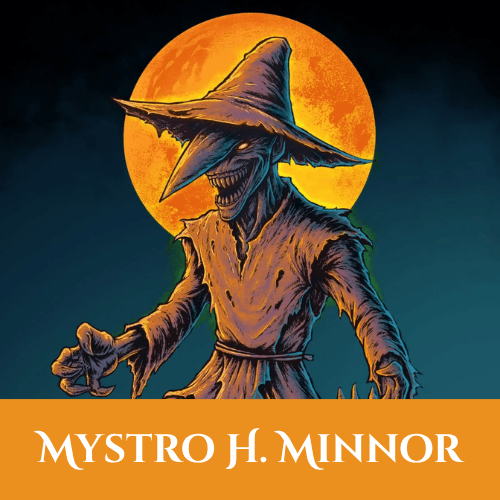
In The EggsTabletMan by Mystro H. Minnor, the circus is the place where everything begins to change.
Fourteen-year-old Melody Sook sits at the back of the tent on her birthday, watching a world that seems to move without her. She has one dream — to dance — and every reason to believe it will never come true. Then, in the shadows at the edge of the performance, she meets him.
The EggsTabletMan does not appear in the ring. Rather than performing in the spotlight, he exists in that space between the light and the dark — exactly where the circus keeps its most dangerous secrets. You feel his presence before you see him.
What follows is a story about transformation, ambition, and the price of wanting something so desperately that you stop asking what it costs. The circus setting is not incidental — it is essential. It is a world where illusion is truth, where strangers offer gifts, and where the darkness at the edge of the light hides things that should never be seen.
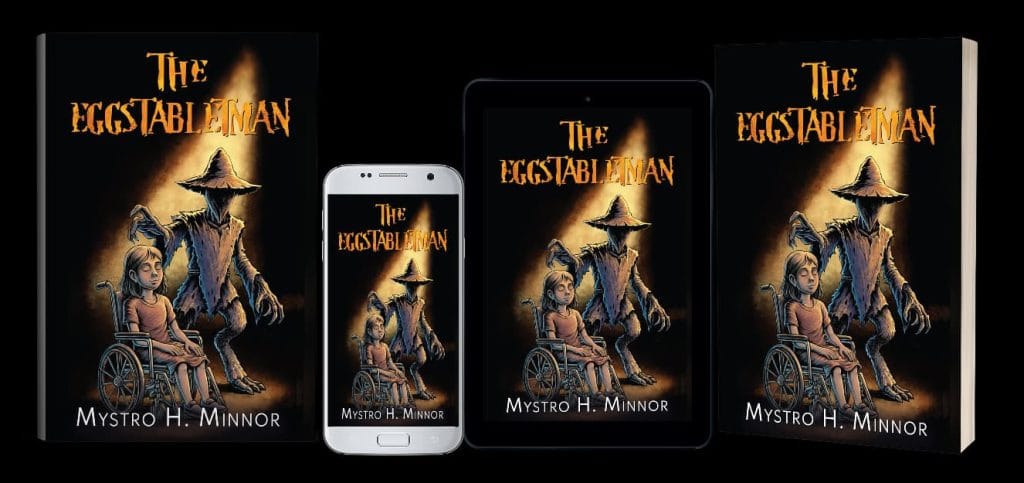
The EggsTabletMan is available on Amazon, Barnes & Noble, and Walmart. Get your copy here — or read the first three chapters free at eggstabletman.com.
Horror Backdrop: The Circus Will Always Come Back
What makes the circus such an enduring horror setting is its impermanence. It arrives. It dazzles. Then it leaves. And the town it visited is never quite the same.
That is the final horror of the circus — not what happens while it is there, but what it leaves behind. The performer who disappeared. The child who has not been quite right since that night under the big top. The feeling, persistent and irrational, that something departed that you cannot name and will never recover.
The circus makes the perfect horror backdrop because it understands what horror understands: that the most frightening experiences are the ones that change you, and the most dangerous strangers are the ones who make you grateful for the change.