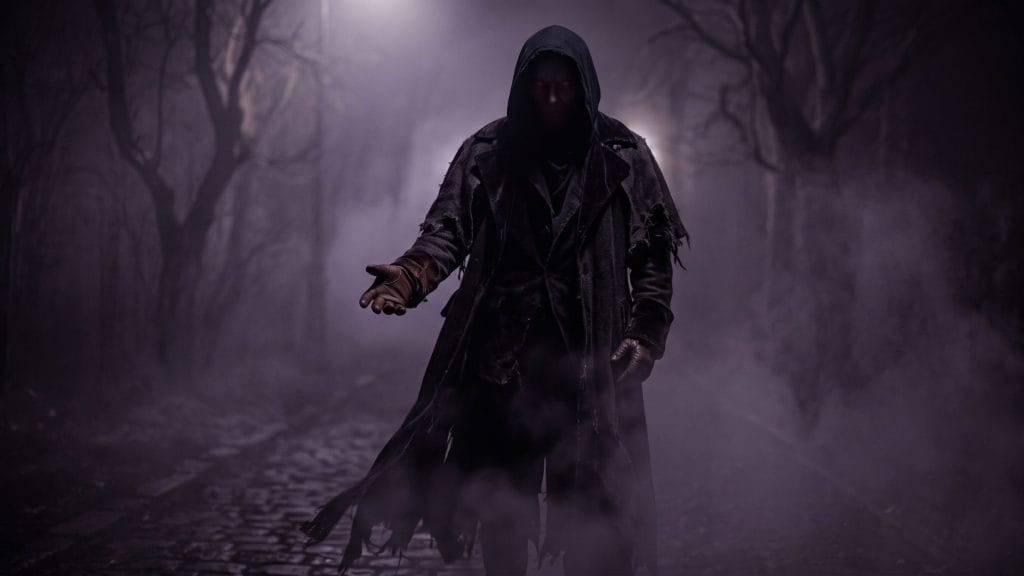
The scariest monsters in horror are not the ones that come at you screaming. They are the ones that make you glad they showed up.
Monsters called seductive monsters have haunted storytelling since ancient horror. From mythology to modern fiction, writers reuse the idea that the predator is welcome. The creature across the room may seem manageable, and you can run, fight, or prepare. Moreover, over time, audiences reflect on the tension between curiosity and harm.
That allure can hide danger behind compliments, strategic kindness, and a sense of safety you crave. The moment of realization arrives when boundaries fail and the threat seems closer than you expected. Then it is too late to escape it or reverse the emotional pull.
From ancient myth to contemporary fiction, readers cannot ignore this familiar thread. Understanding the pattern helps you stay vigilant and protect yourself. By recognizing cues, you reduce risk when encountering danger. Such awareness helps readers navigate stories responsibly. Ultimately, restraint protects imagination from harm.
Moreover, these seductive monsters reveal something uncomfortable about human nature.
We are drawn to attention that pays us heed.
We are vulnerable to kindness, to beauty, and to the feeling that someone notices our longing.
The best horror writers understand this, and they build monsters accordingly.
The Siren — Ancient and Enduring
Consequently, the oldest template for the seductive monster is the Siren. In Homer’s Odyssey, the Sirens lure sailors toward the rocks with music so beautiful that no human being can resist it. Notably, the danger isn’t the sound itself. The danger is what the sound makes you want. The sailors who hear them don’t feel threatened. They feel drawn. They feel, in that final moment, that they have found exactly what they were looking for.
Moreover, the Siren as a figure has evolved across centuries of storytelling, but the core mechanism stays the same: she offers something you genuinely want, and the wanting itself is what destroys you. In contrast to monsters that target your body, the Siren targets your desire. She doesn’t overpower you. She makes you come to her.
Indeed, the reason this archetype keeps returning is that it maps onto real human vulnerability. We are susceptible to things that seem to offer us what we lack. The Siren is the horror version of that susceptibility taken to its logical, lethal end.

Dracula — Desire Weaponized
Bram Stoker’s Dracula is frequently remembered as a creature of violence and domination. Specifically, that reading misses what makes him so enduring. Dracula succeeds not because he overpowers his victims but because he makes them want what he is offering.
Mina and Lucy do not simply suffer his attention. They are drawn to it. Ultimately, Stoker understood that the Victorian horror of Dracula was not just supernatural — it was social.
He represented the seductive danger of transgression itself. He was charming, cultured, and attentive in a world where women were expected to want nothing outside narrow convention. His offer was, in its way, a genuine one. The cost was simply everything.
Furthermore, the vampire as a figure has never fully separated itself from seduction. Every iteration of the archetype, across two centuries of fiction and film, returns to this core: the monster who makes being consumed feel like intimacy.
The Faerie — Gifts with Hidden Terms
In Celtic and British folklore, the Fair Folk are among the most consistently dangerous seductive monsters ever conceived. They are beautiful. They offer gifts. They invite you into their world with music and light and promises of wonder.
Notably, they never lie — which makes them more dangerous than anything that does.
The horror of the faerie is contractual. They offer something real, and they expect something real in return. Consequently, the terms are never fully explained until you have already agreed to them.
By the time you understand what you have given up — your name, your memory, a year of your life, your child — the exchange is complete and cannot be undone.
Moreover, this is a seductive monster that operates on a kind of predatory patience. The faerie does not rush. It waits for you to reach for what it is holding out. The reaching is what binds you.
As a result, the horror is not imposed from outside — it comes from your own desire meeting something that knows exactly how to answer it.
Pennywise — The Monster That Knows What You Want
Stephen King’s Pennywise, from It, operates through fear rather than desire in its most direct manifestations. However, its deeper power is the same as every seductive monster on this list.
Specifically, It doesn’t just frighten — It appears as whatever its victims most deeply need or want before it turns.
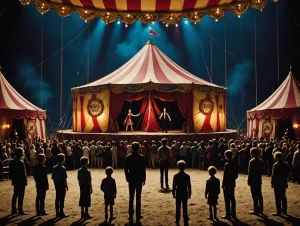
The clown form is itself a seduction. Children are drawn to clowns. They are meant to be safe, joyful, celebratory. Pennywise weaponizes that expectation. It shows up wearing the face of something that should mean no harm, and it uses that initial ease — that moment of “oh, it’s just a clown” — to get close.
Indeed, what King understood is that the most effective predators don’t announce themselves as threats. They announce themselves as gifts.
By the time the children of Derry recognize what they are actually facing, Pennywise is already close enough to reach them.
Morgan le Fay — The Mentor Who Betrays
Arthurian mythology gives us Morgan le Fay, one of the earliest examples in Western literature of the seductive monster in a mentor’s clothing. She is powerful, knowledgeable, and generous with her gifts — right up until the moment she isn’t.
Morgan le Fay teaches. She heals. She offers her knowledge to those she favors. Furthermore, she is also working toward her own ends the entire time, and those ends are not the same as yours. The horror of Morgan le Fay is the horror of realizing that someone you trusted has been managing you all along.
Ultimately, the relationship was real — the learning was real, the help was real — and it was still a form of predation.
In contrast to monsters that are simply evil, Morgan le Fay is complex. She has reasons. She has grievances. She is, in many versions of the story, not entirely wrong about the people she opposes. That complexity is precisely what makes her so unsettling as a figure.
The EggsTabletMan — Care That Consumes
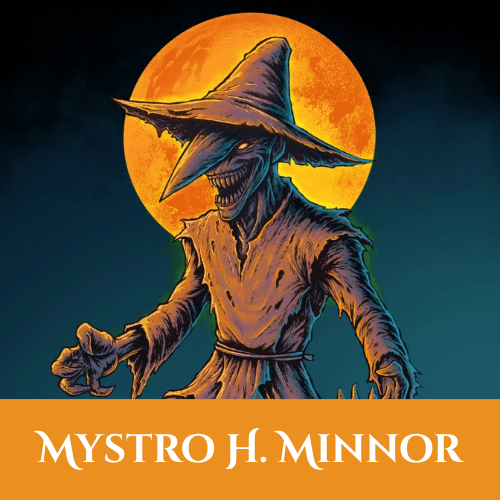
Mystro H. Minor’s debut novel, The EggsTabletMan, works in this same tradition — and extends it in directions that feel genuinely new.
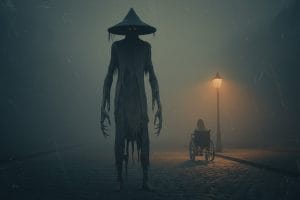
The EggsTabletMan finds fourteen-year-old Melody Sook at the edge of her own life: a girl who has never walked without pain, who has never danced, who has been told by the world in every possible way that there are experiences she simply will not have.
He appears to her in empty streets and offers to teach her. Moreover, he is patient in a way that no one else in her life has managed to be. He recites Yeats and Rilke. He guides her wheelchair through the dark. He takes away her pain when she falls.
Specifically, what makes the EggsTabletMan terrifying is that the care is not entirely false. He does teach her to dance. He does see her in a way no one else does.
The horror accumulates not through deception but through what is happening underneath the care the whole time — the bruises shaped like four fingers, the light he draws from people in slow threads, the watching that never stops.
Consequently, by the time Melody understands what she has already given, she cannot take it back. The seduction worked not because she was foolish but because she was lonely and the offer was real.
That is the most honest, most devastating version of this horror archetype: the monster that gives you something genuine, and takes something you didn’t know you were losing.
Furthermore, the EggsTabletMan endures as a figure because he understands the same thing every seductive monster on this list understands: the most effective way to destroy someone is to make them grateful for your presence first.

Why Seductive Monsters Hit Differently
Ultimately, seductive monsters work because they don’t flatter the reader’s sense of their own good judgment. They don’t reassure you that you would have known better.
In contrast, the monster that announces itself as a monster lets you imagine you would have run. The monster that arrives with kindness, with attention, with exactly the right offer at exactly the right moment of vulnerability — that one makes you wonder.
The horror isn’t just in what it does. It’s in the quiet question underneath: would I have recognized it in time?
As a result, the seductive monster outlasts every other kind of horror figure, because the fear it produces is not external. It lives in the part of you that is still, in some small way, hoping the offer was real.
Ready to meet a seductive monster done right? The EggsTabletMan by Mystro H. Minor is available now on Amazon, Barnes & Noble, and Walmart. Read the first three chapters free at eggstabletman.com.