If you’ve finished a book and can’t sleep, because of the story’s impact, you’ve felt psychological horror books.
That effect signals quality done right.
Unlike gore-driven horror, psychological horror books avoid blood or monsters with sharp teeth.
Moreover, they rely on something unsettling: the growing sense that you can’t trust the world.
You can’t trust the people around you, or even your own mind.
These are the psychological horror books readers keep returning to—the ones that linger long after the final page.
House of Leaves — Mark Z. Danielewski
Consequently, no list of psychological horror books is complete without House of Leaves.
Published in 2000, it remains one of the most formally ambitious horror novels ever written.
Additionally, it presents a story about a house whose interior is larger than its exterior.
The tale unfolds through layers of footnotes, unreliable narrators, and documents of uncertain origin.
Furthermore, the horror here is architectural and existential.
The house doesn’t just threaten the characters.
It threatens the reader’s ability to trust the text itself.
Danielewski uses typography, blank pages, and shifting fonts to make you feel the disorientation his characters experience. Specifically, by the time the novel reaches its conclusion, you’re not entirely sure what was real and what was constructed by a narrator who may not be reliable.
Indeed, House of Leaves isn’t easy reading. It demands patience and engagement. In contrast, that difficulty is exactly what makes it so effective — the effort of reading mirrors the experience of slowly losing your grip on something solid.
We Have Always Lived in the Castle — Shirley Jackson
Shirley Jackson was writing psychological horror before the term was widely used. We Have Always Lived in the Castle, published in 1962, follows Merricat Blackwood — one of the most unsettling narrators in American fiction.
Merricat is isolated, deeply strange, and utterly convinced that her way of seeing the world is correct. Moreover, she is also, gradually and horrifyingly, revealed to be capable of things the reader didn’t see coming.
The horror of this novel is slow and accumulating. It lives in the gap between what Merricat tells you and what you begin to understand.
Ultimately, Jackson understood something that many horror writers miss: the most frightening perspective to inhabit is one that feels completely coherent from the inside, while revealing itself as deeply disturbed from the outside. We Have Always Lived in the Castle puts you inside that perspective and keeps you there.
The Silent Patient — Alex Michaelides
The Silent Patient crossed over from thriller into psychological horror for many readers because of the sustained dread it produces — not through violence, but through the slow unraveling of what’s actually happening.
Notably, the novel follows a woman who shoots her husband and then refuses to speak. The therapist assigned to her case becomes increasingly obsessed with understanding why.
Meanwhile, the reader is kept off-balance throughout, given information that feels definitive and then pulled back into uncertainty. When the ending arrives, it recontextualizes everything that came before it.
Consequently, this is the mechanism that makes psychological horror so effective: the retroactive horror. You feel it not just in the final revelation, but in the re-reading of every earlier scene with new understanding.
Specifically, the horror keeps expanding backward through the story long after you’ve finished.
Beloved — Toni Morrison
Beloved is a novel about grief, trauma, and what the mind does when it cannot process what has happened to it. Sethe, a formerly enslaved woman, is haunted — literally — by the ghost of her dead daughter.
Furthermore, Morrison never lets you settle into certainty about what is supernatural and what is psychological. The haunting in this novel is real in both senses simultaneously: a genuine supernatural presence and also the embodied form of guilt and grief so profound it cannot remain inside one person.
Indeed, the horror of Beloved is the horror of history — specifically, the history of what was done to people — and Morrison renders it with a precision that makes it impossible to distance yourself from.
This is psychological horror in its most morally serious form. It uses the tools of the genre not for entertainment alone but to make the reader carry something they couldn’t carry before.
The Troop — Nick Cutter
The Troop arrives on this list as the counterpoint — the novel that proves psychological horror and visceral horror are not mutually exclusive.
Nick Cutter’s novel about a Boy Scout troop stranded on an island with a horrifying stranger contains some of the most physically disturbing sequences in contemporary horror fiction.
However, what elevates it beyond shock value is the psychological architecture underneath. The stranger who arrives on the island has been broken so completely that his presence destabilizes the boys’ understanding of loyalty, survival, and what people are capable of doing to each other.
Moreover, Cutter is interested in the specific horror of watching someone you trust change into something unrecognizable under pressure.
In contrast to novels that rely purely on atmosphere, The Troop tests how much psychological horror a reader can hold alongside physical horror simultaneously. As a result, it works as a kind of stress test — and most readers find themselves haunted by it long after they’ve finished.
Flowers for Algernon — Daniel Keyes
Flowers for Algernon is not marketed as horror. It is, nonetheless, one of the most psychologically horrifying books ever written.
The novel follows Charlie Gordon, a man with an intellectual disability who undergoes an experimental procedure and becomes extraordinarily intelligent — only to watch that intelligence slowly reverse.
The horror here is entirely cognitive: the fear of losing yourself, the awareness of your own decline, and the cruelty of understanding exactly what you are losing in real time.
Importantly, Daniel Keyes renders this through Charlie’s journal entries, which shift in grammar, vocabulary, and emotional complexity as Charlie changes. You watch his mind expand and then contract through the language itself.
Ultimately, the effect is devastating in a way that no amount of monsters or violence could achieve.
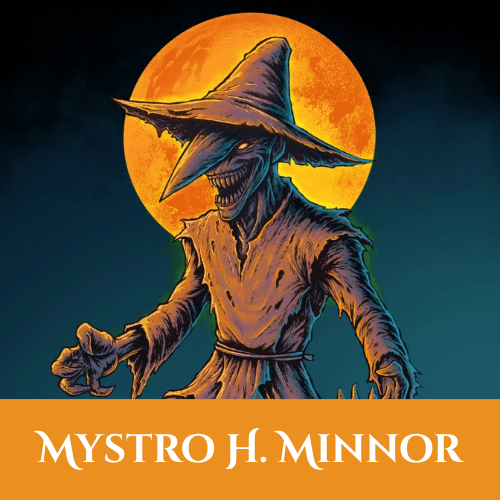
The EggsTabletMan — Mystro H. Minor
Psychological horror books work best when they take something familiar — a caretaker, a teacher, a mentor — and reveal it to be something else entirely.
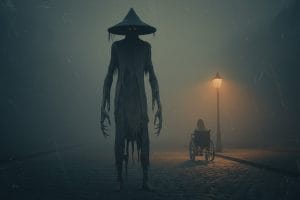
The EggsTabletMan by Mystro H. Minor does exactly this. Fourteen-year-old Melody Sook, who has never walked without pain and has never danced, encounters a figure at the edge of folklore and nightmare who offers to teach her everything she has longed for: movement, music, rhythm, language.
He recites Yeats and Rilke in empty streets.
He takes away her pain when she falls. He tells her that her worth is not conditional on whether anyone else sees it.
Specifically, the horror accumulates slowly — in the gap between what the EggsTabletMan offers and what he takes, in the bruises shaped exactly like four fingers, in the light he draws out of people in slow threads.
By the time Melody understands what she’s already given, it is far too late to take it back.
Notably, this debut novel understands something every great psychological horror book on this list understands: the most effective horror doesn’t announce itself. It arrives with an offer.
Furthermore, what makes The EggsTabletMan genuinely unsettling is that the offer is real — he does teach her, he does help her, the care is not entirely false — which makes the horror of what he truly is all the more impossible to shake.
In contrast to monsters that threaten you from outside, the EggsTabletMan becomes part of you before you realize what he is.
What These Psychological Horror Books Have in Common
Across every title on this list, the horror comes from the same source: not what is shown, but what is understood. The slow realization. The retroactive dread. The question that keeps opening up rather than closing.
As a result, psychological horror books linger in a way that other horror cannot. Physical horror ends when the book closes.
Psychological horror keeps going — in the questions you’re still asking, the scenes you keep replaying, the discomfort that doesn’t have anywhere to resolve.
Moreover, the best psychological horror books change how you read other things.
You become more attuned to gaps in what narrators tell you, to what characters are avoiding, to the spaces between what people say and what they mean.
That’s the real mark of the genre done right: it doesn’t just scare you. It makes you more awake.
Ready to experience psychological horror that stays with you?
The EggsTabletMan by Mystro H. Minor is available now on Amazon, Barnes & Noble, and Walmart. Read the first three chapters free at eggstabletman.com.